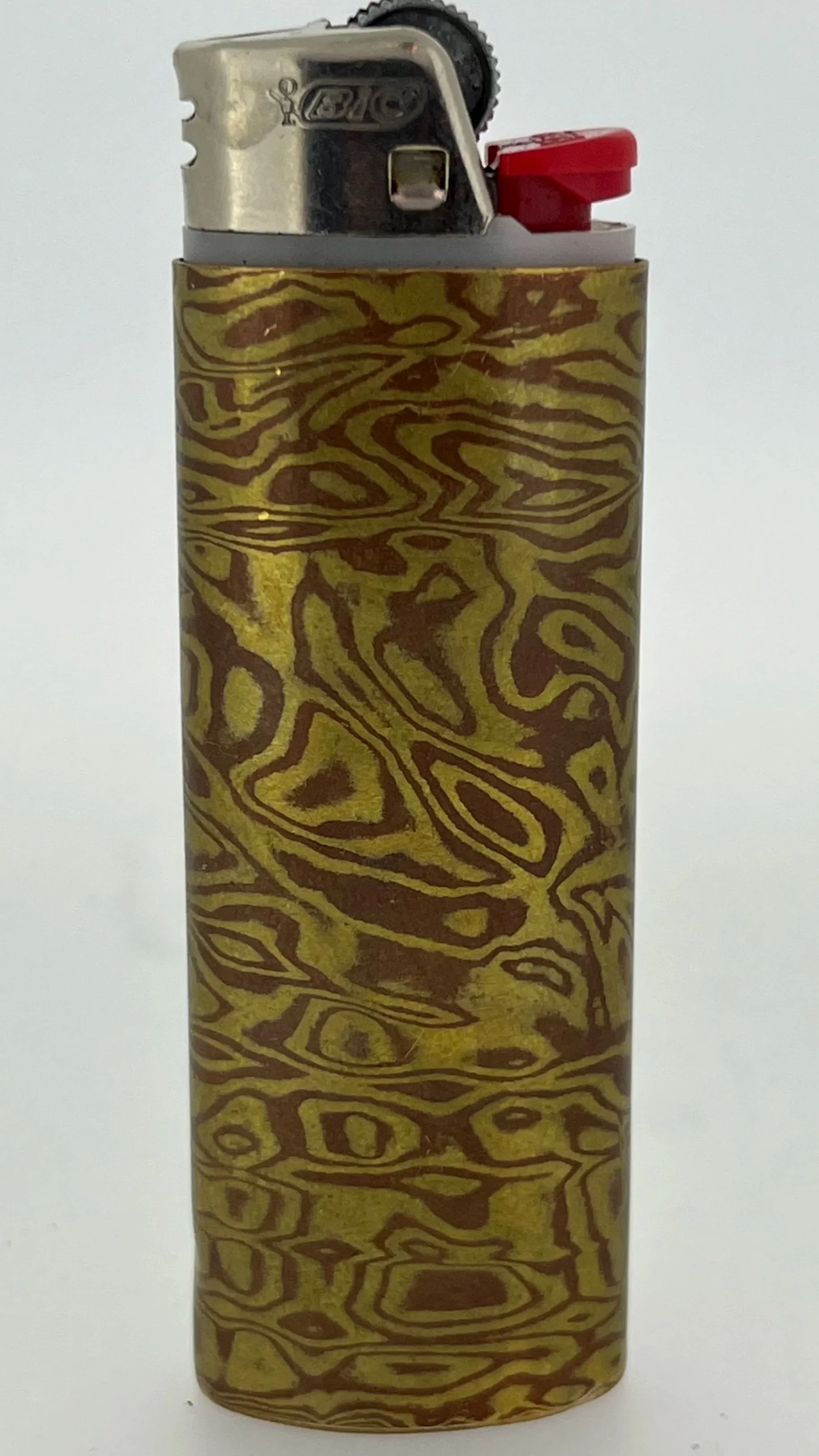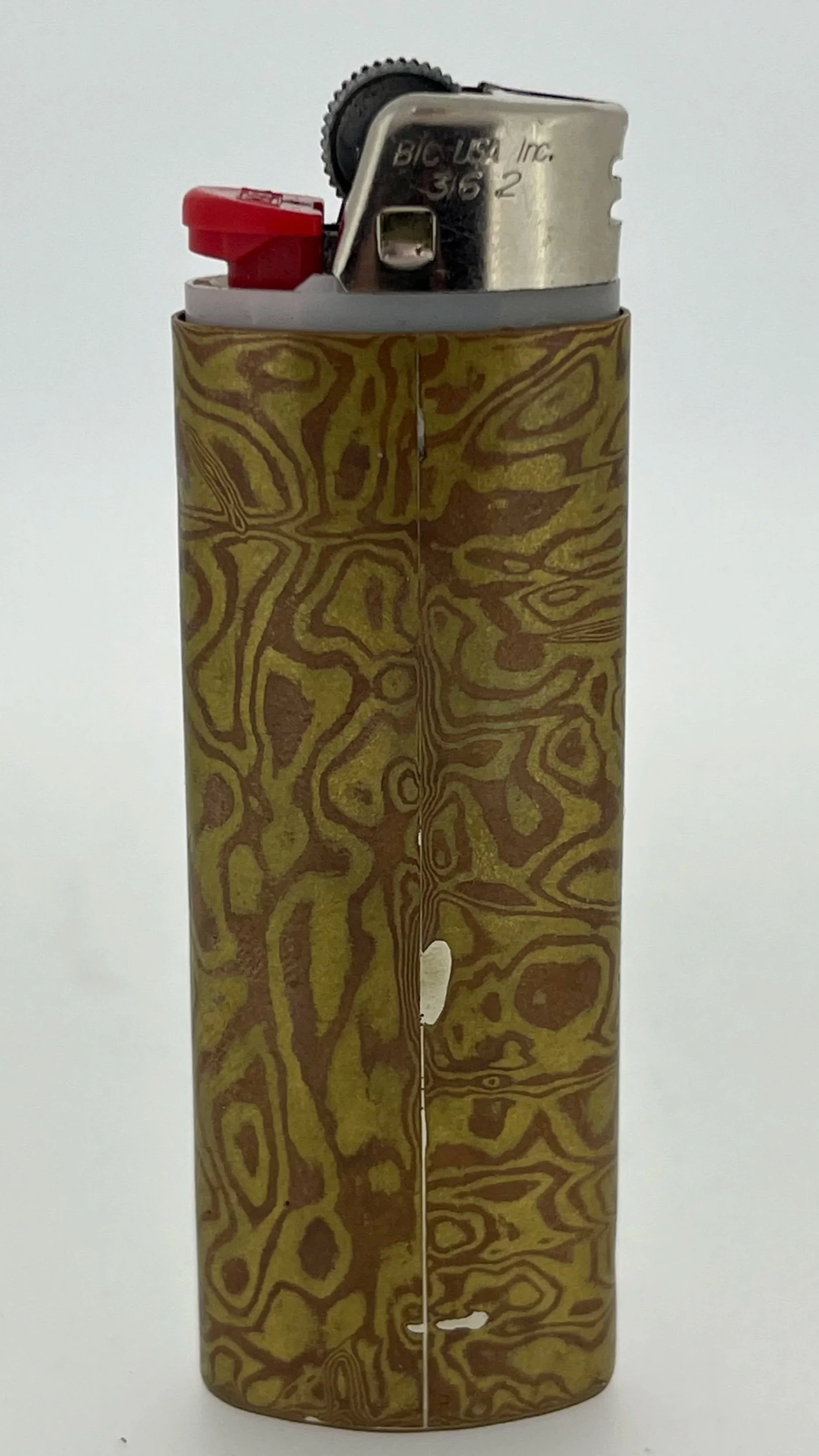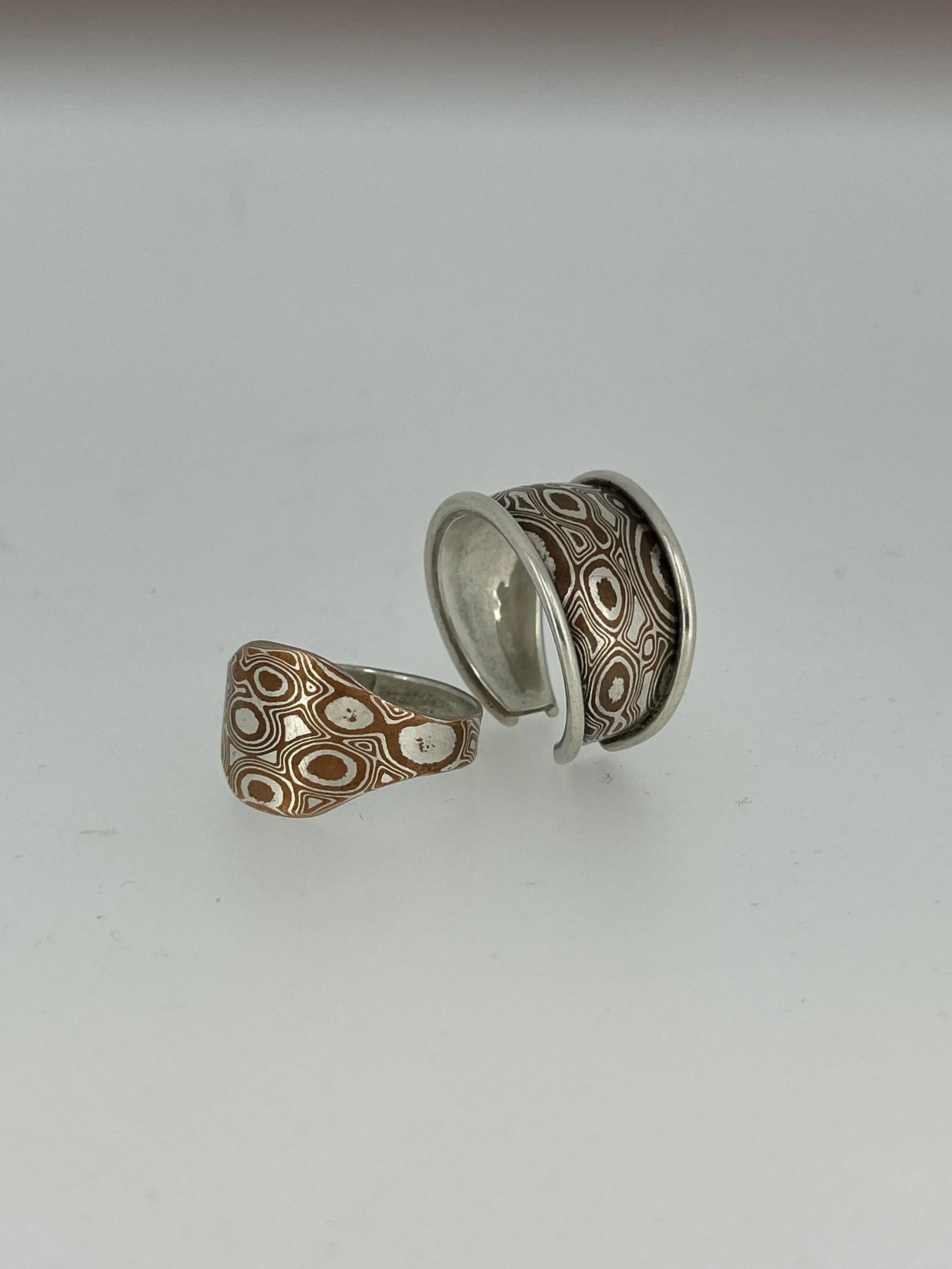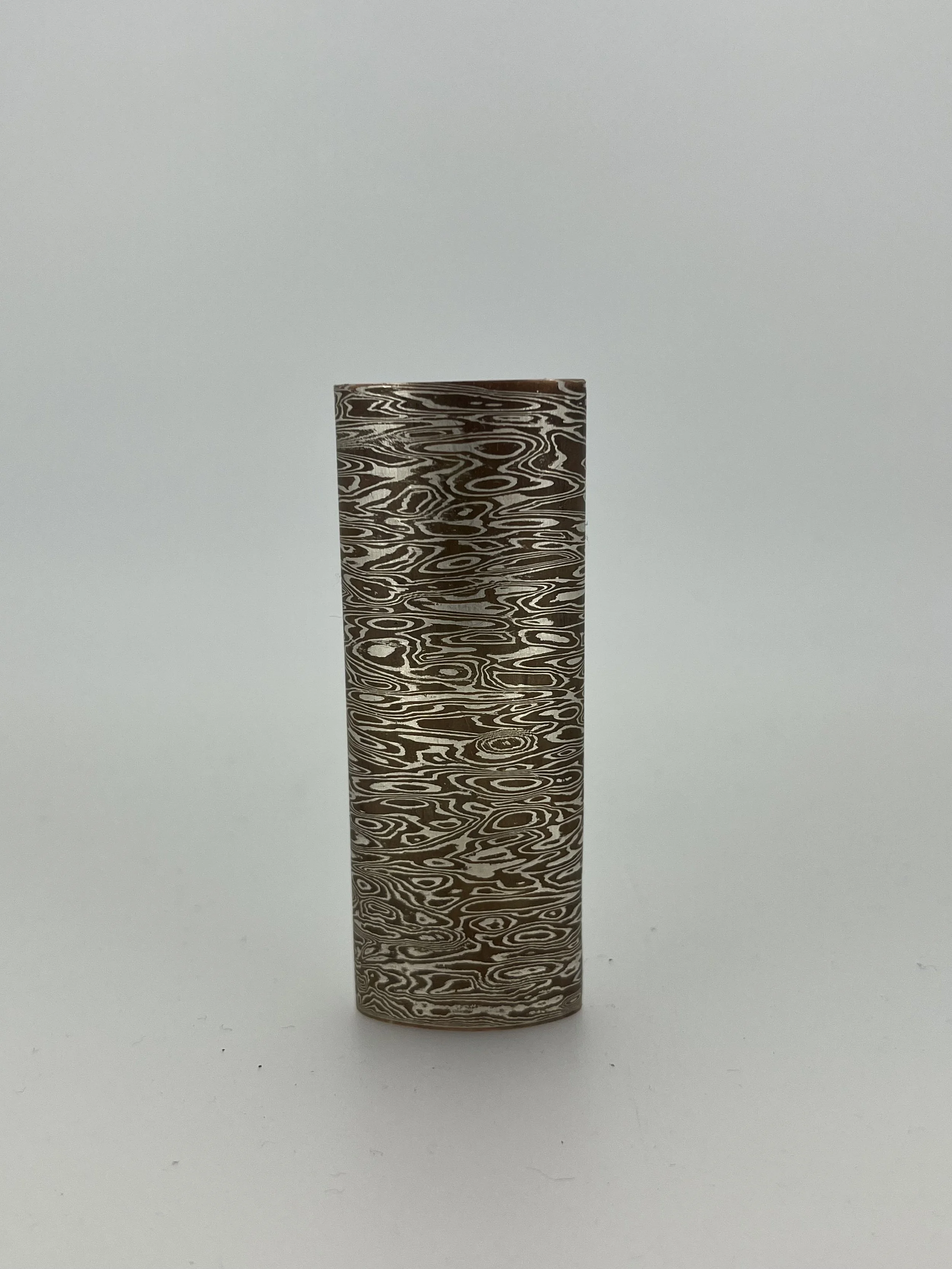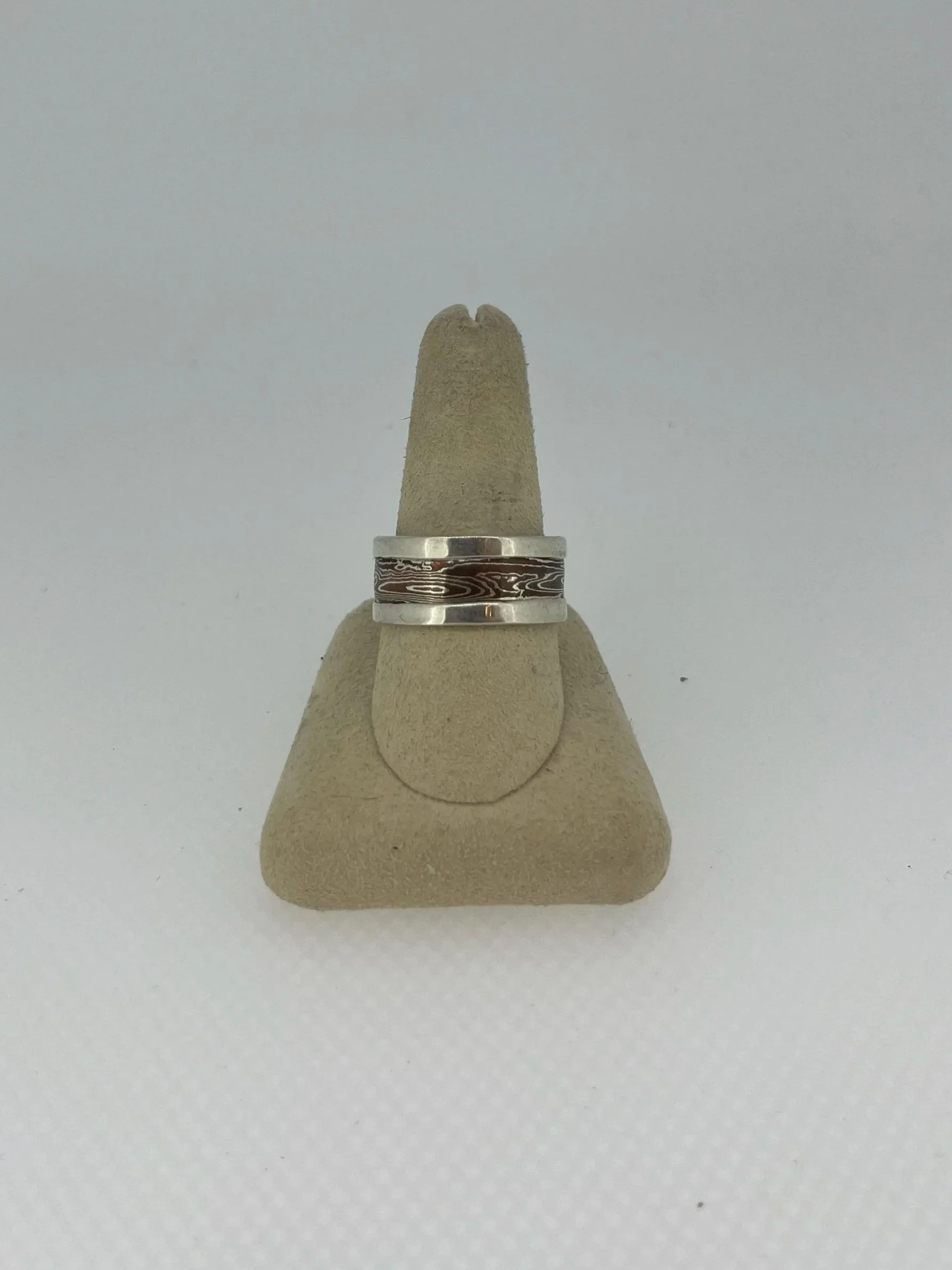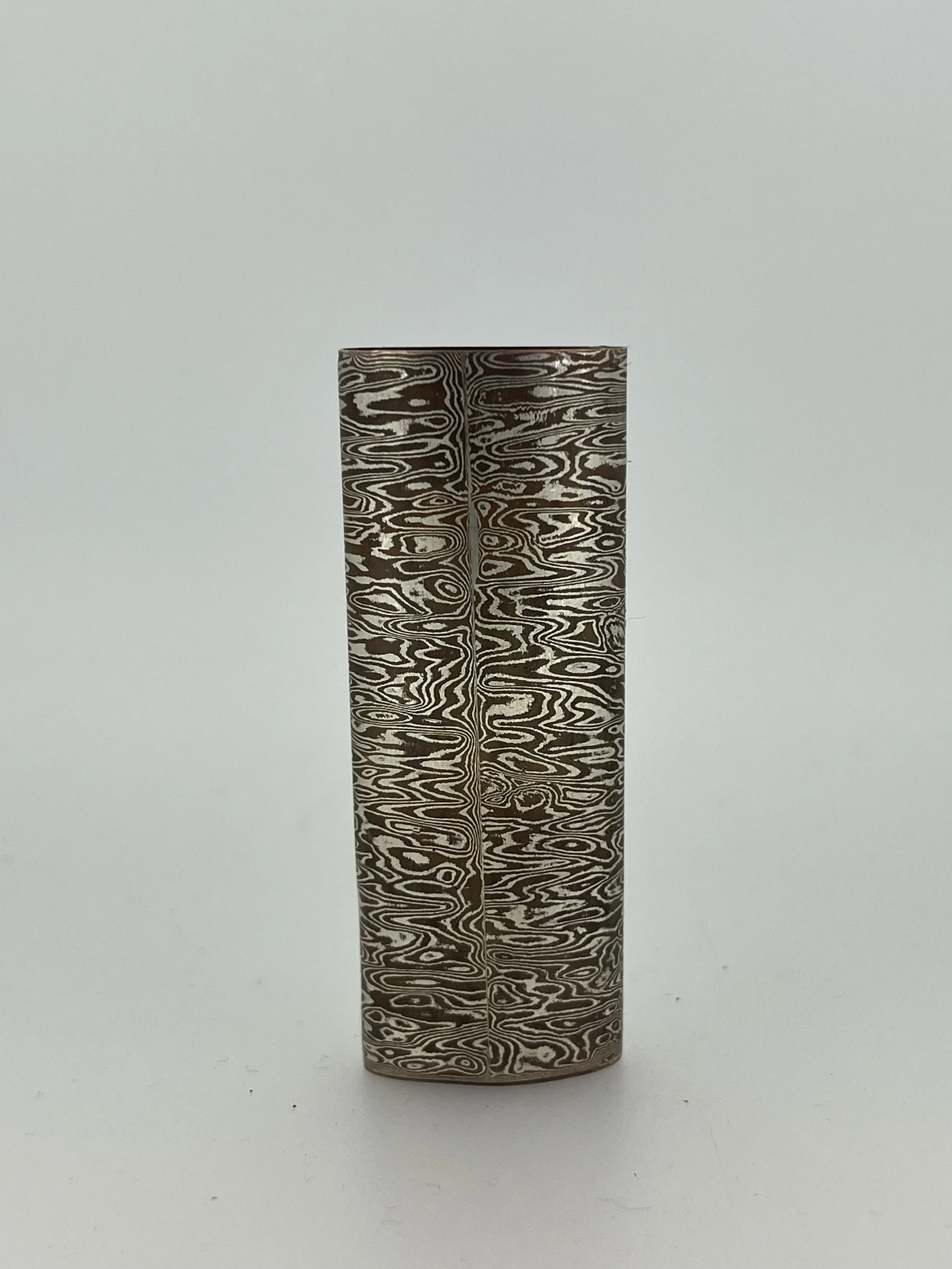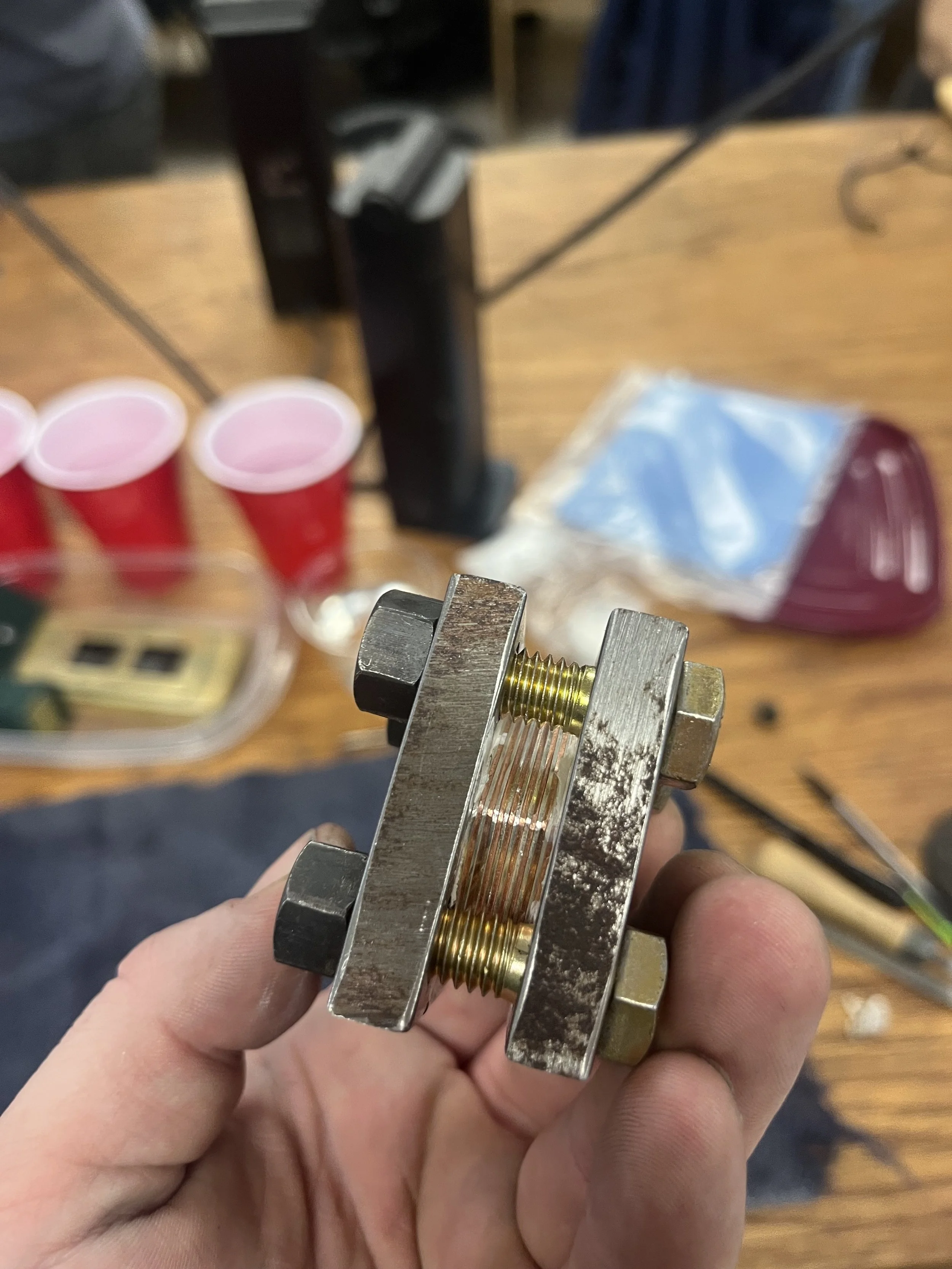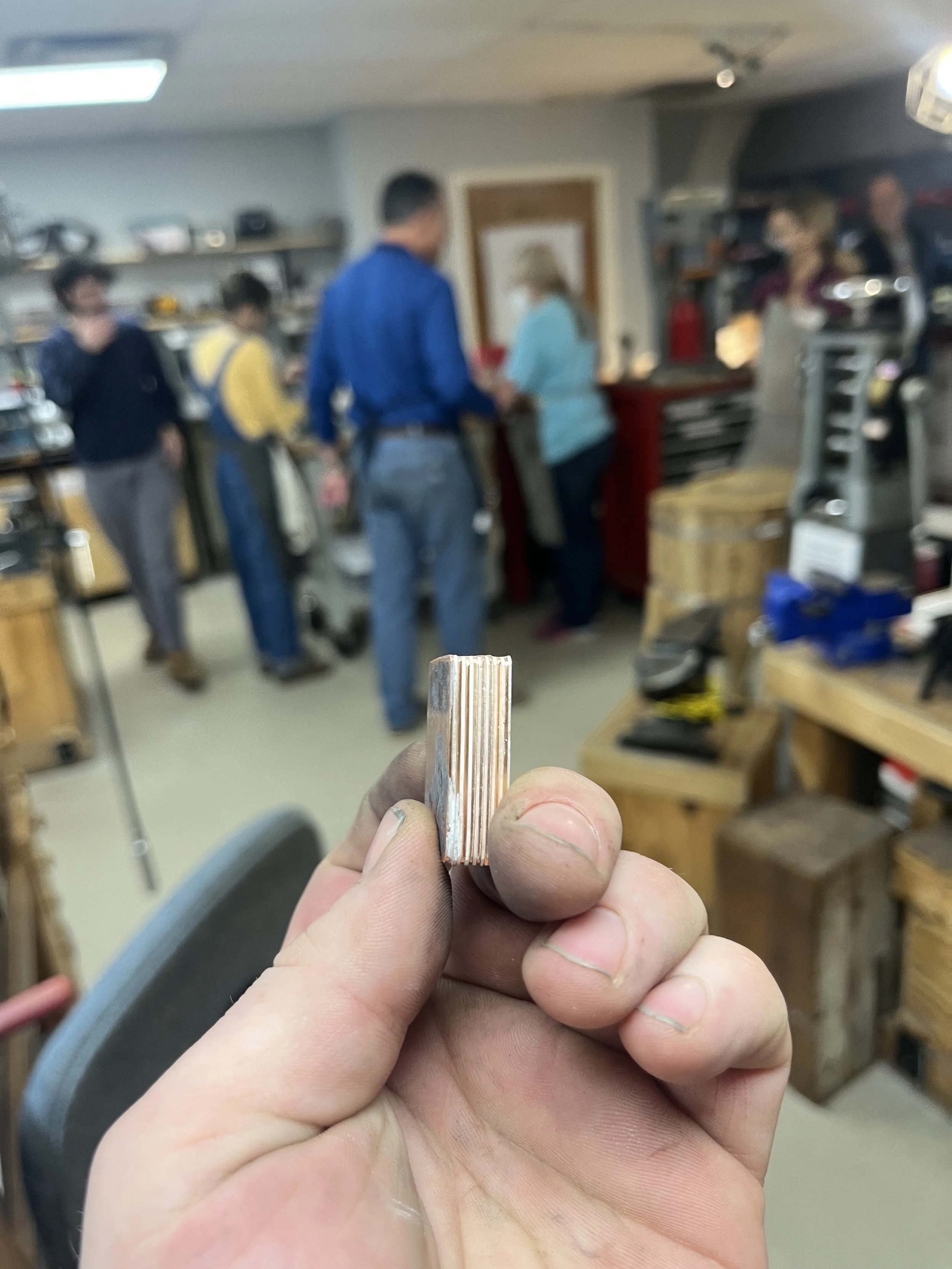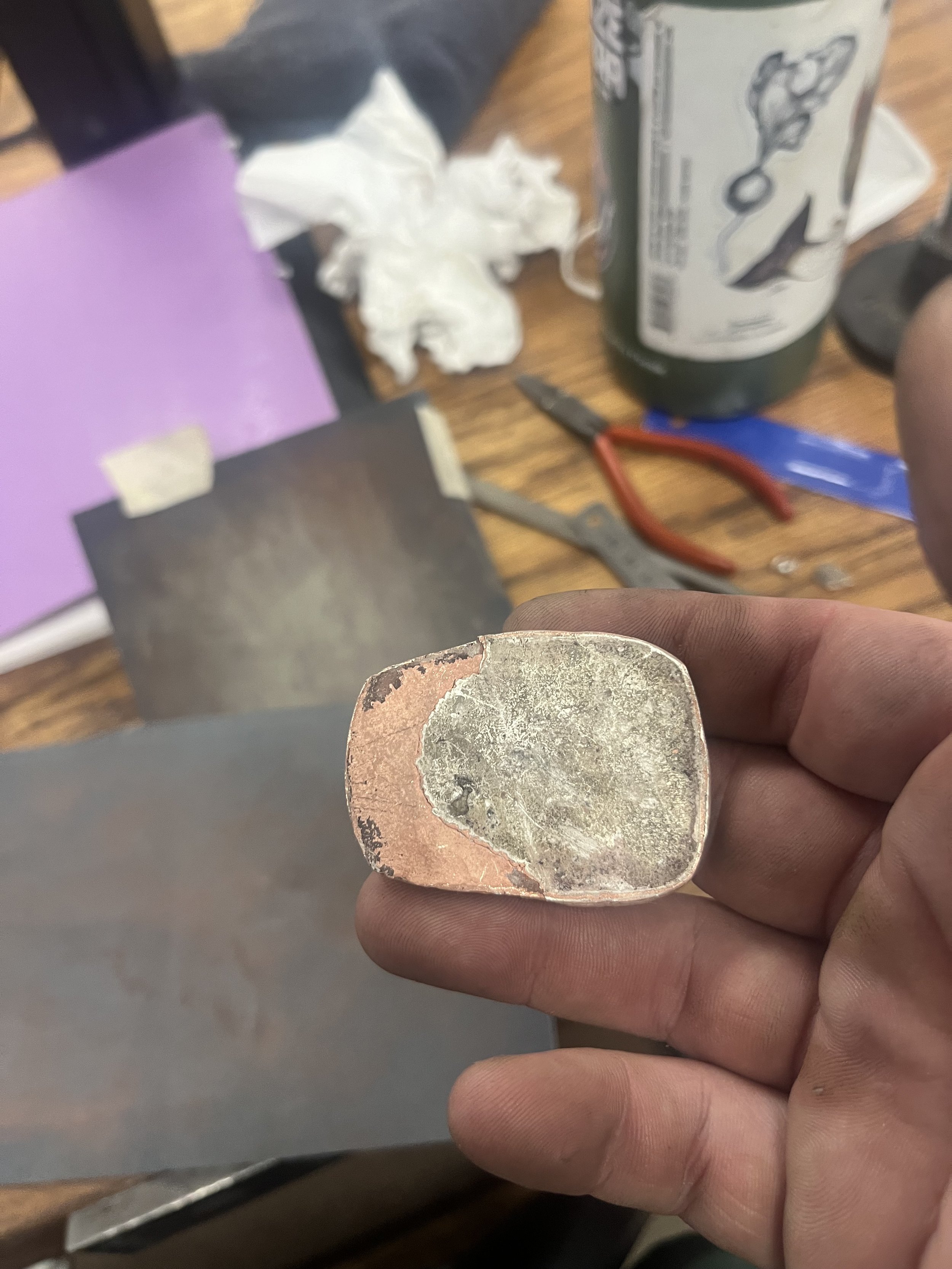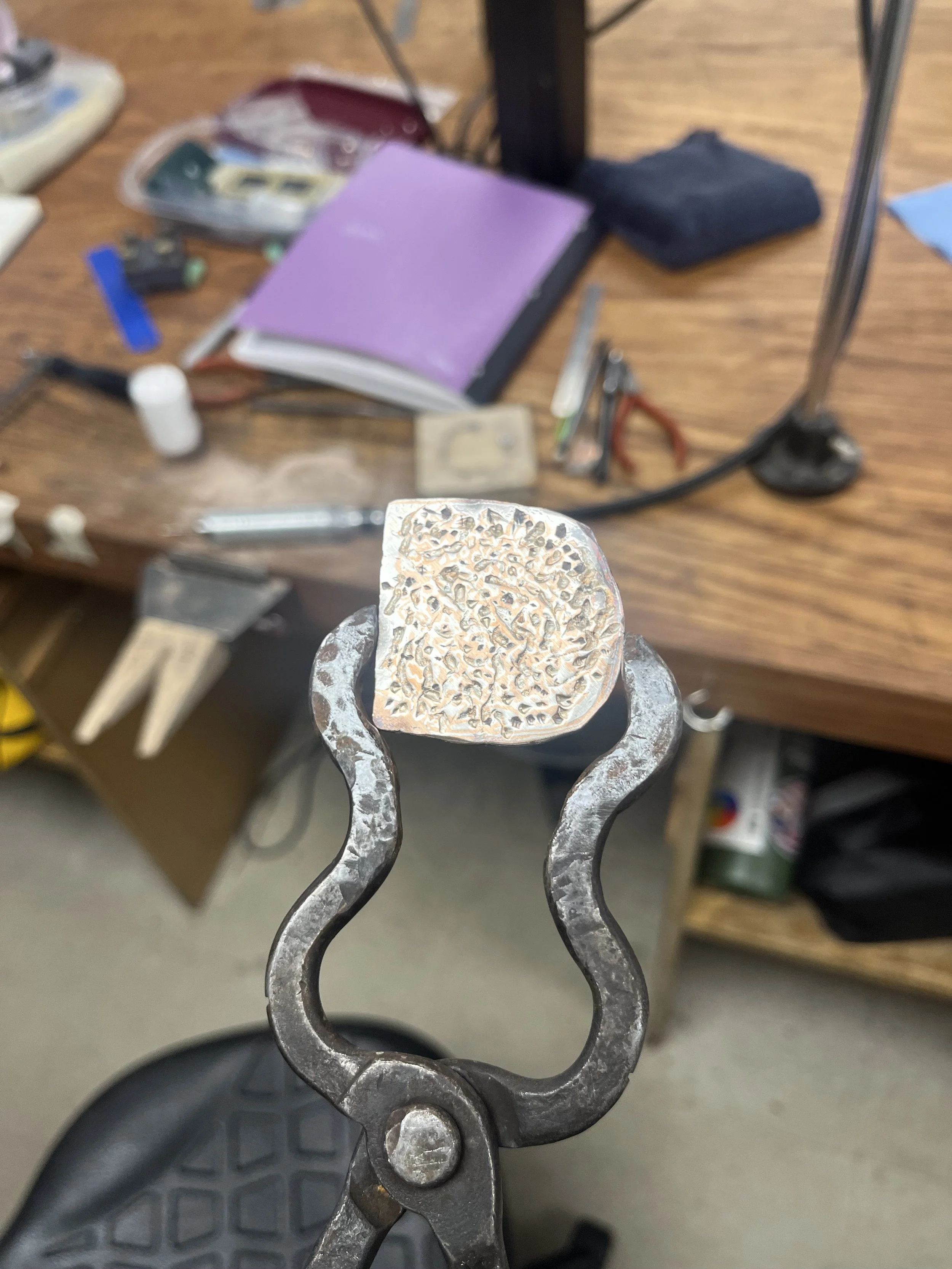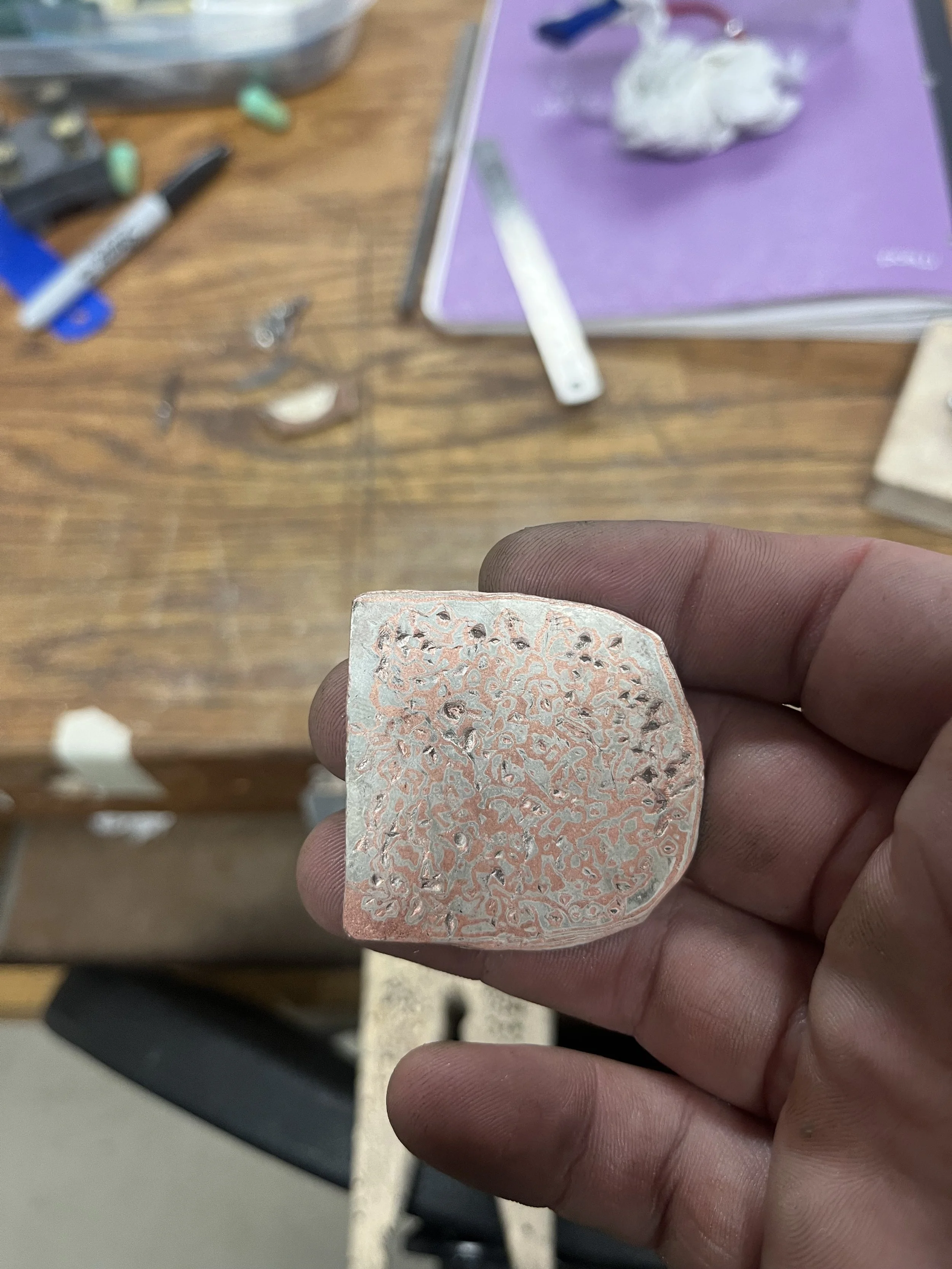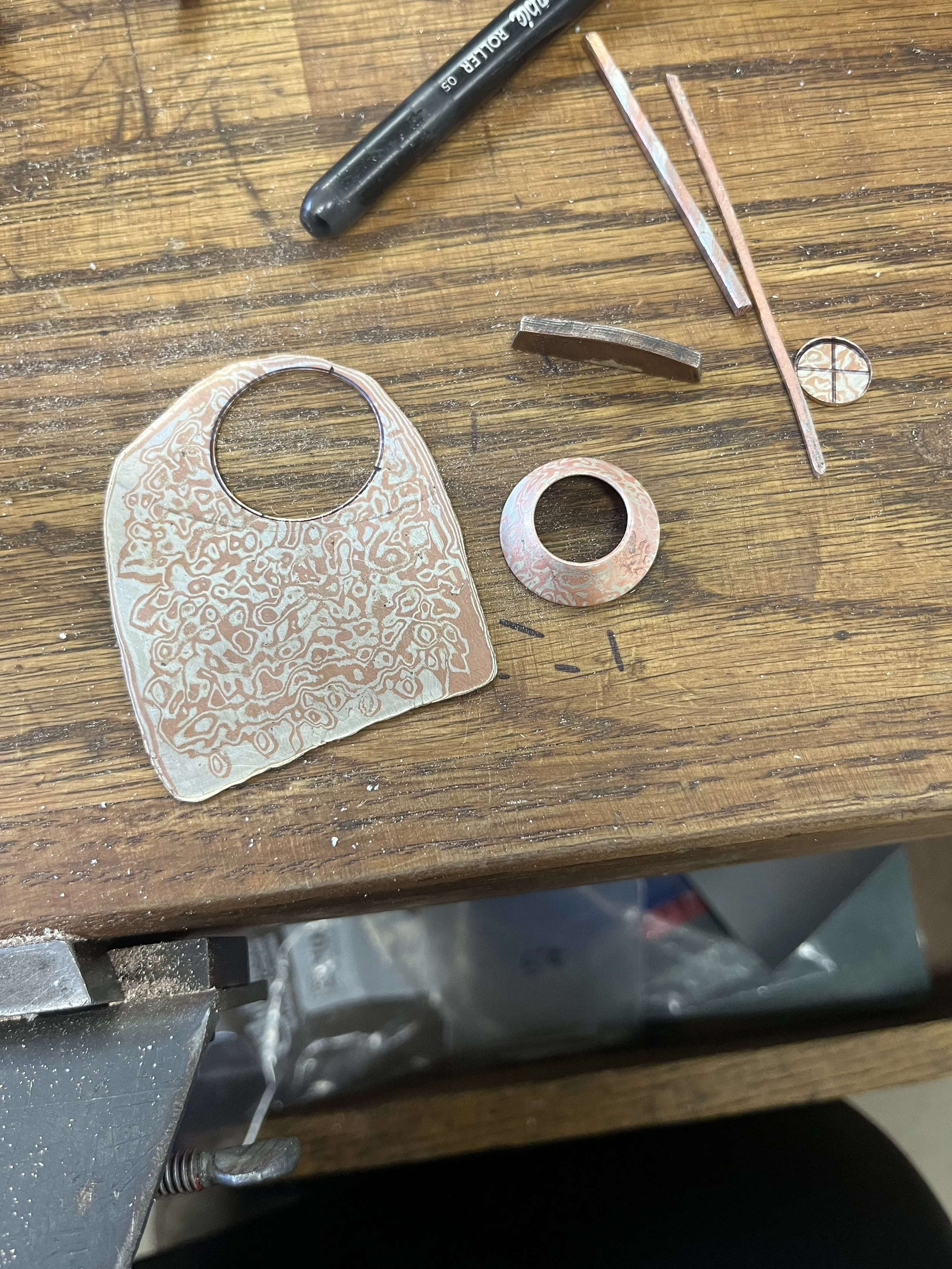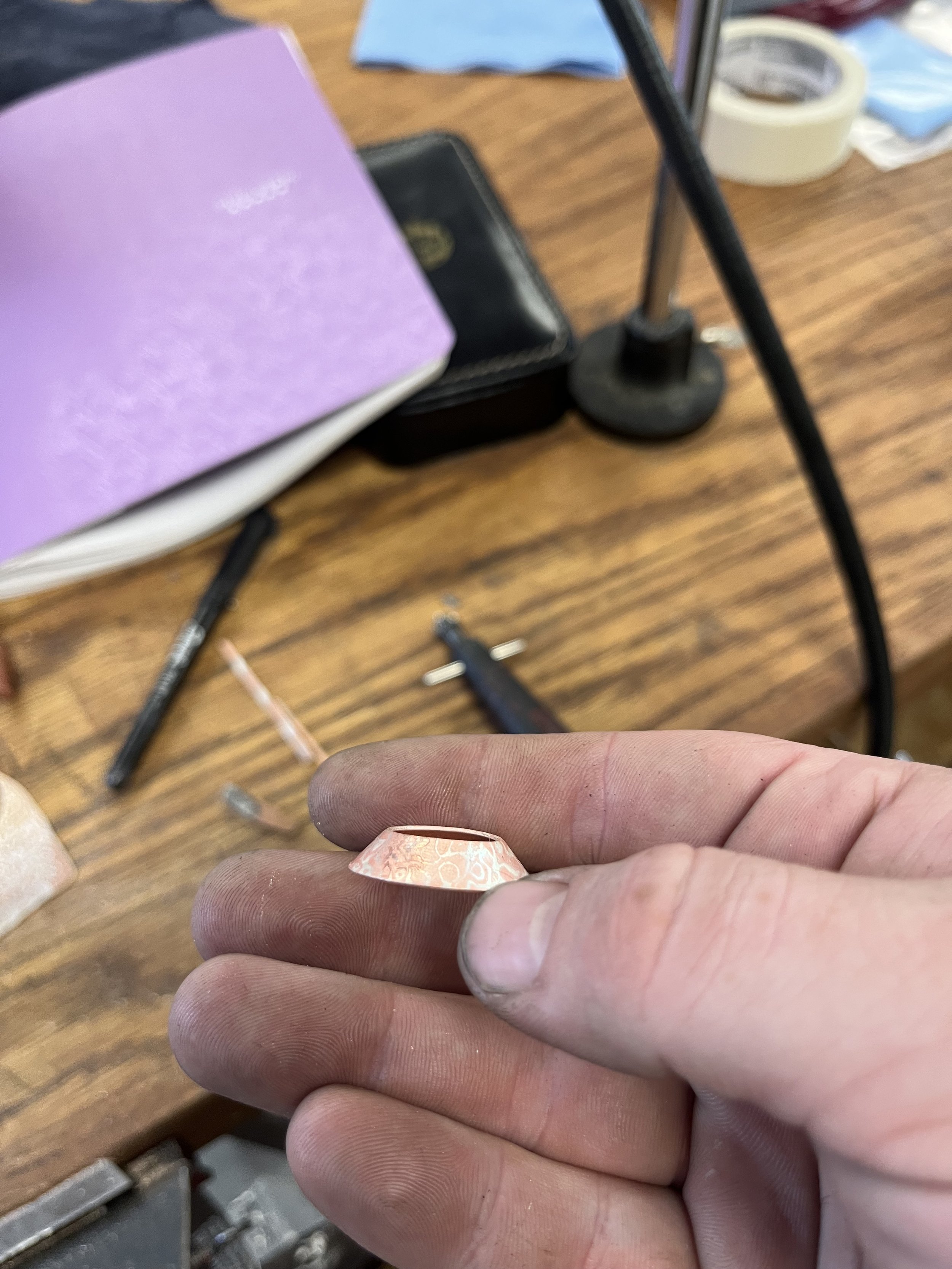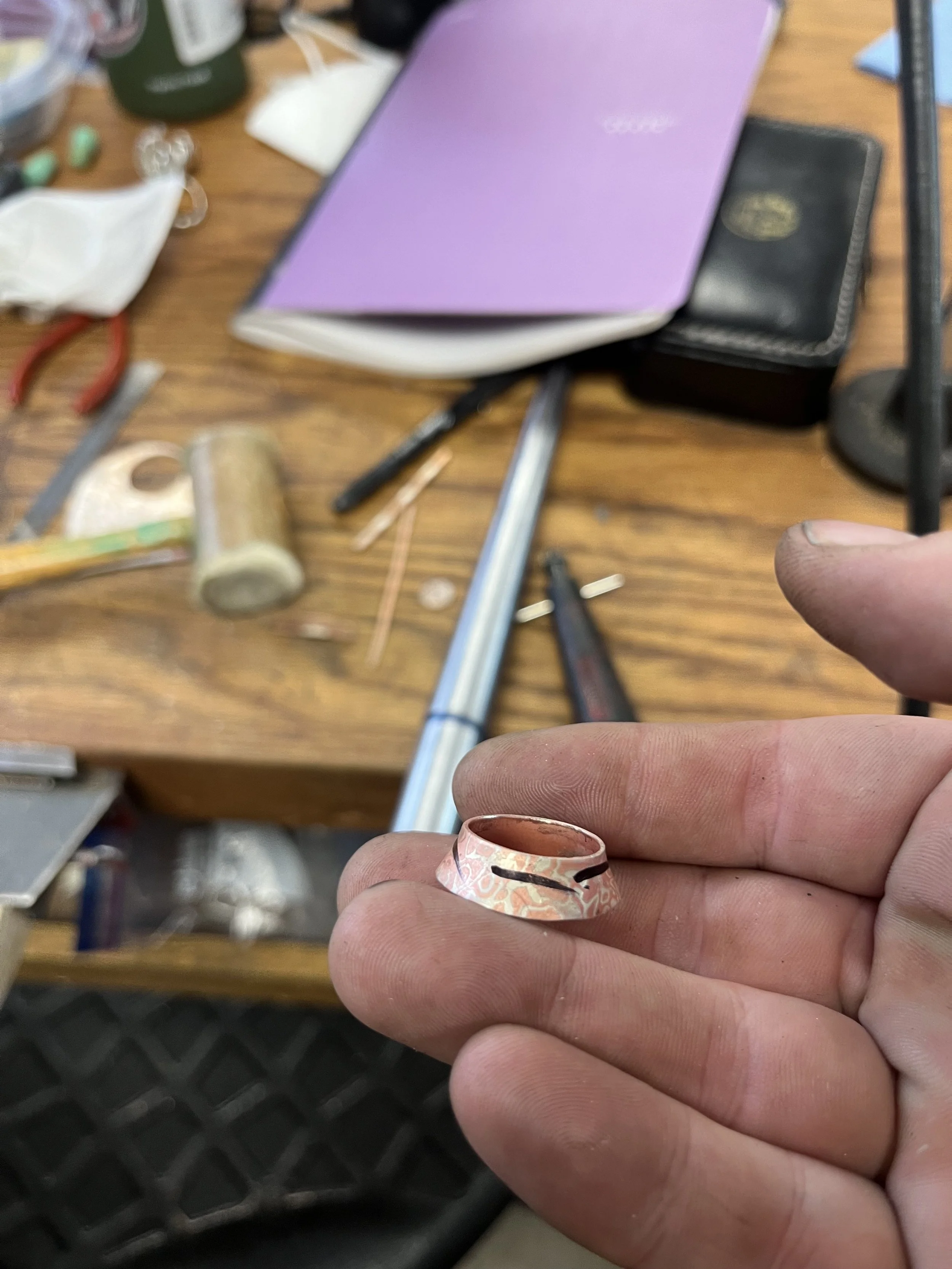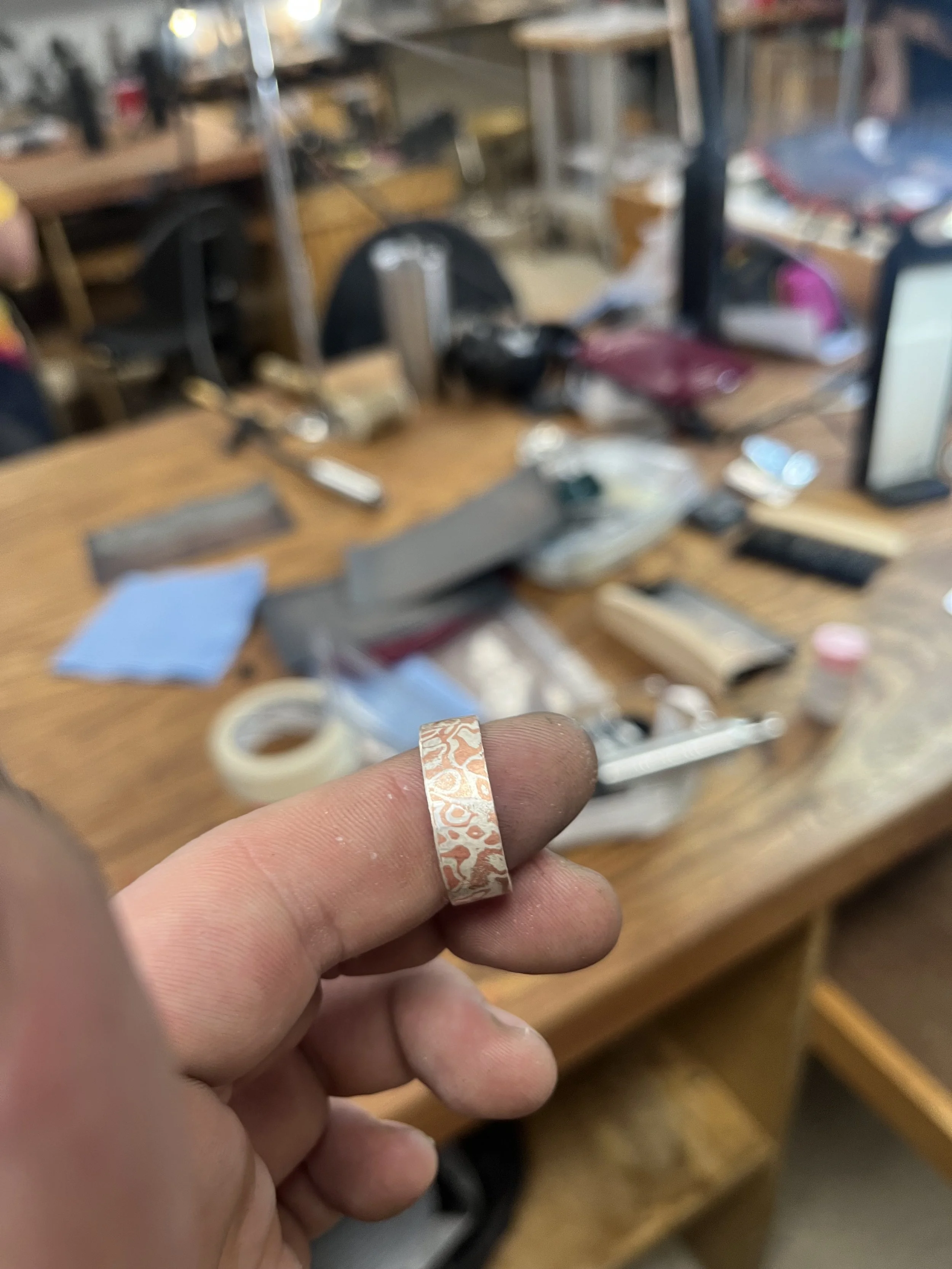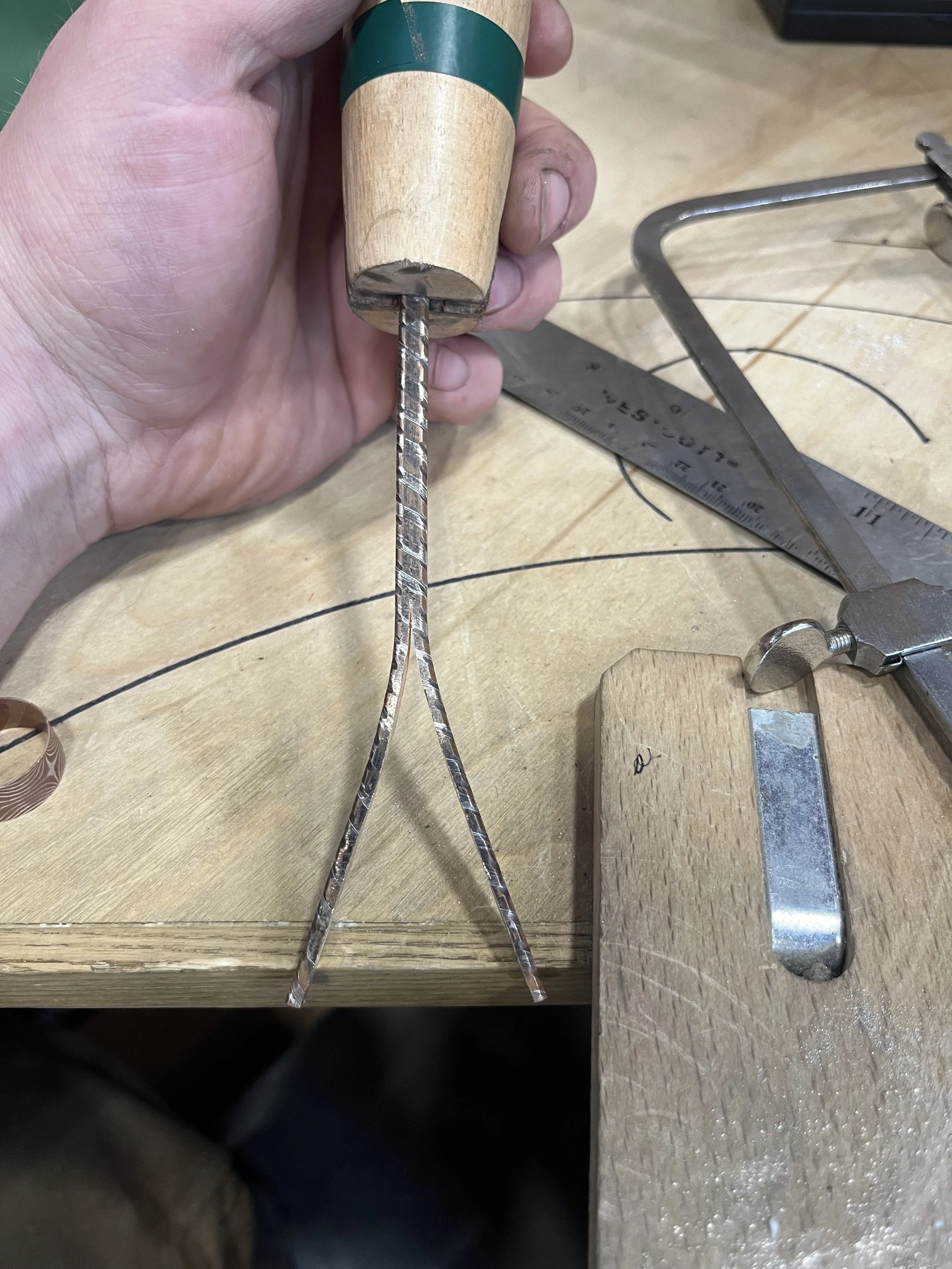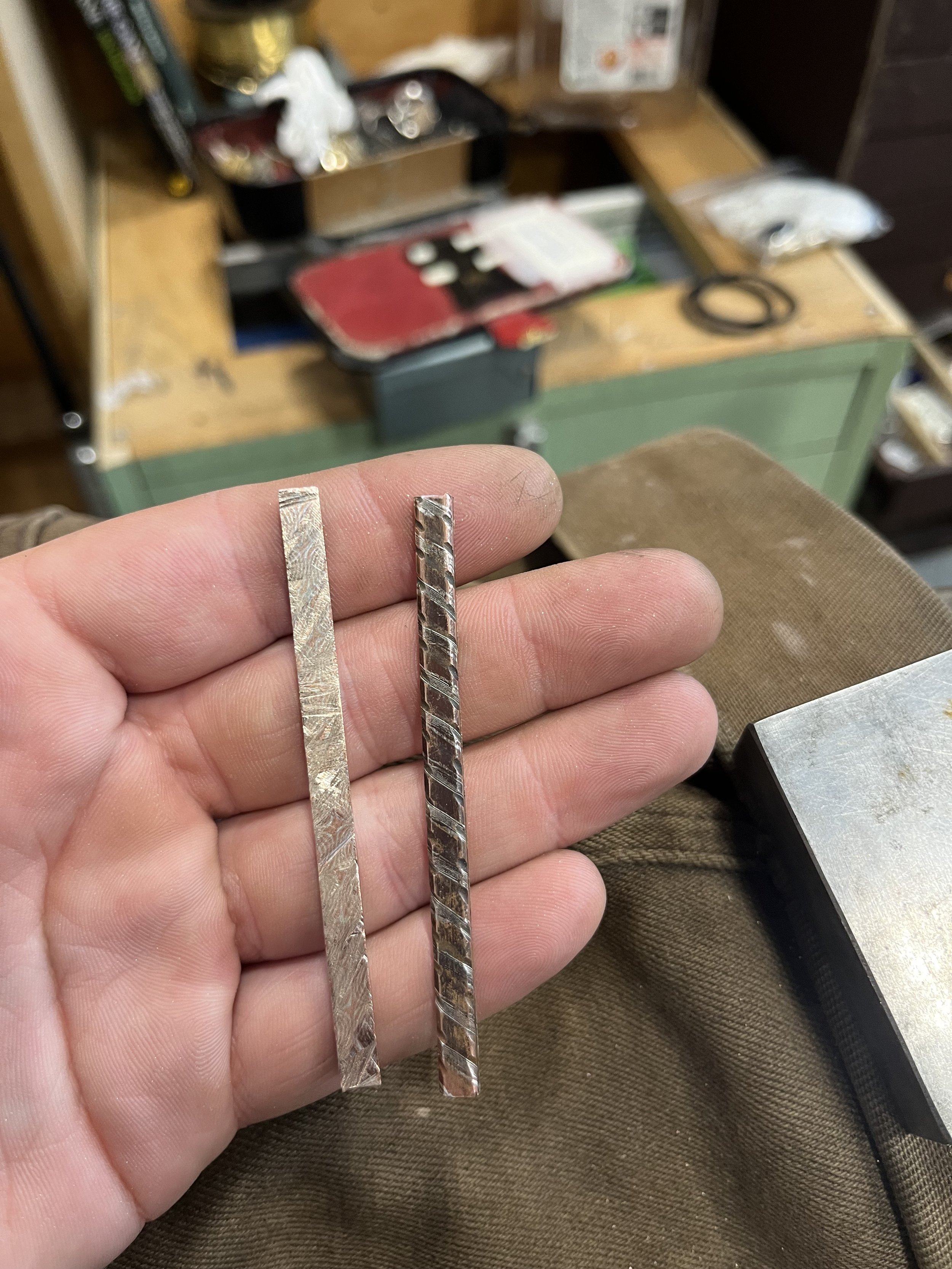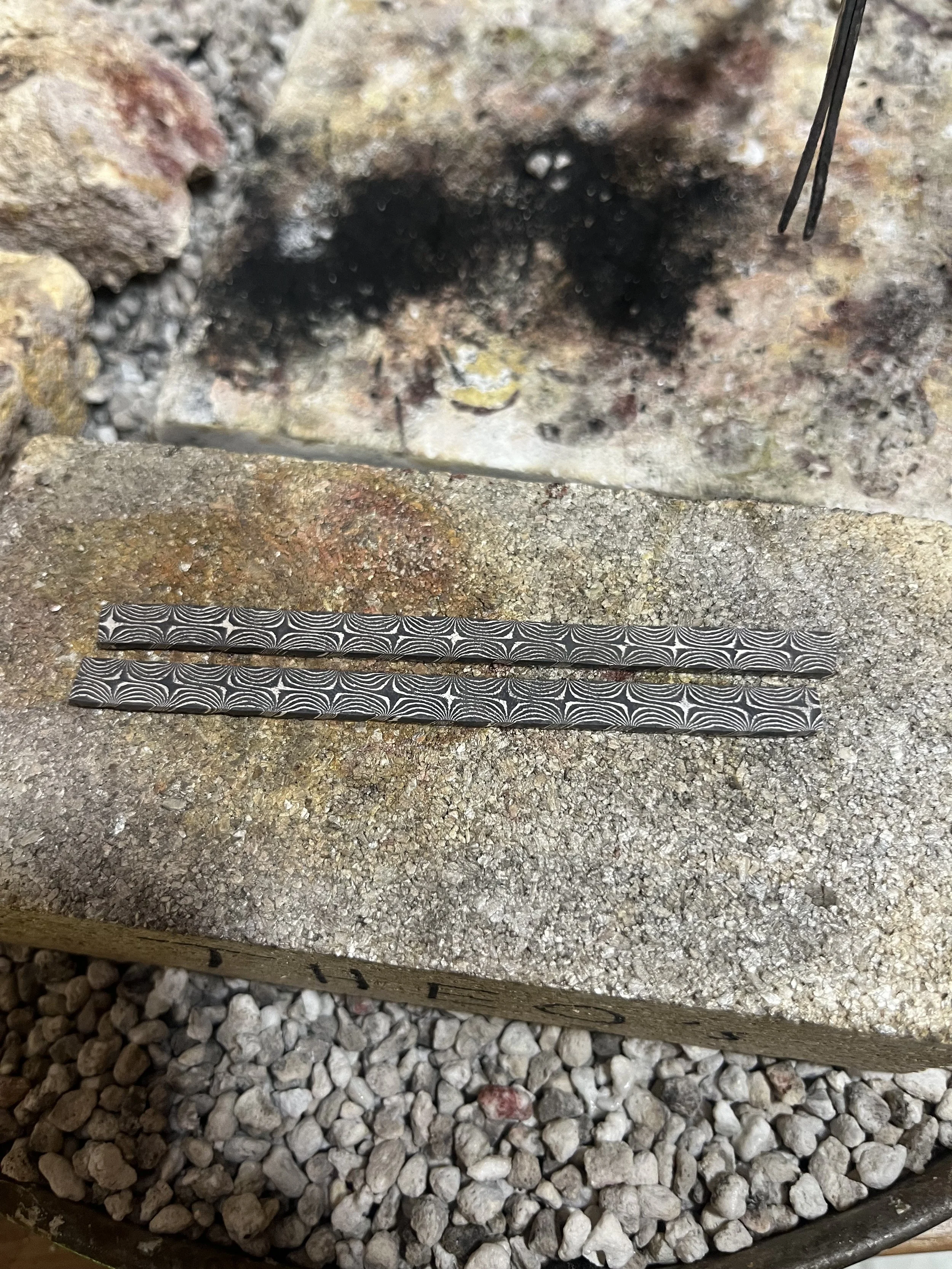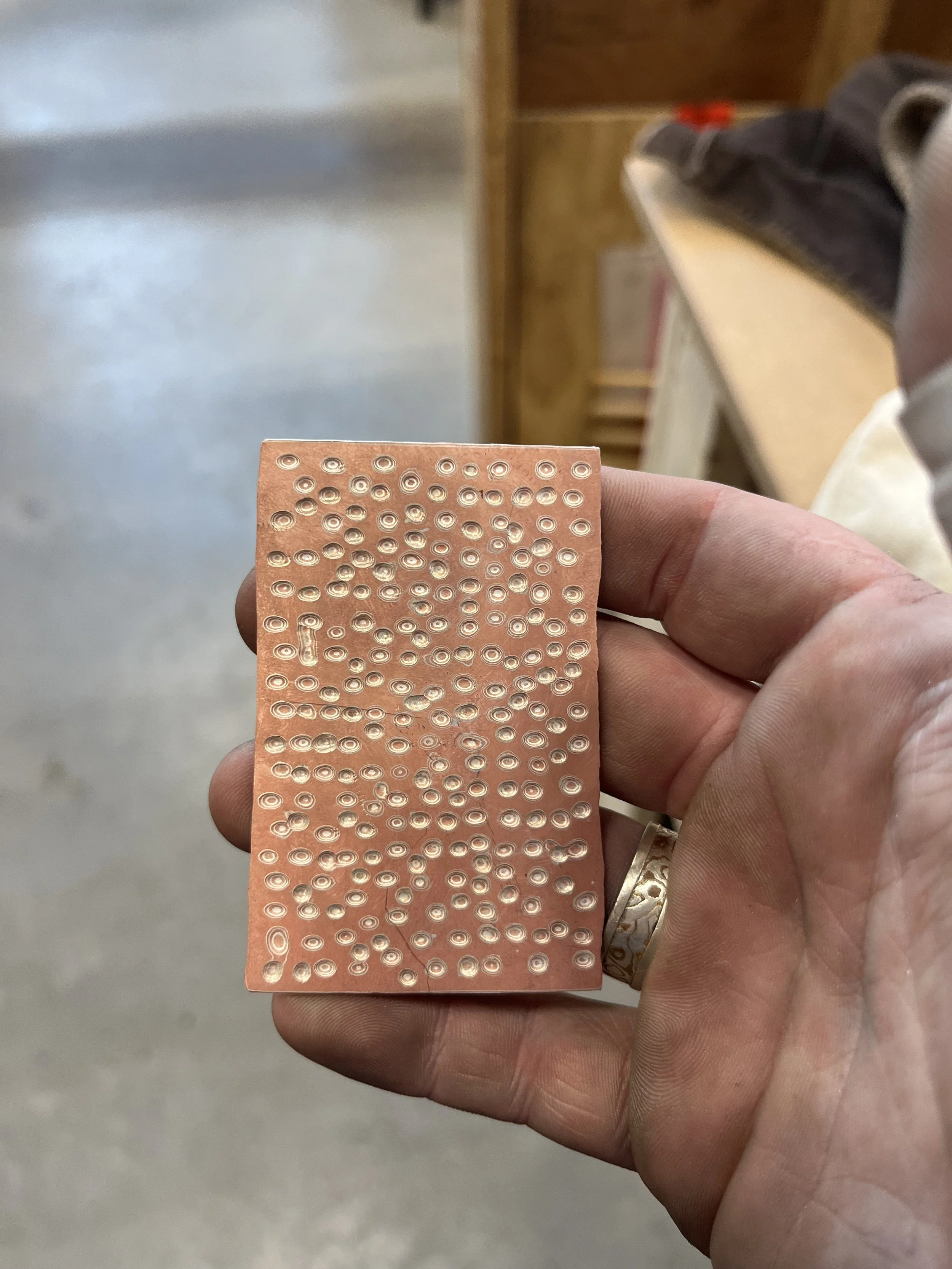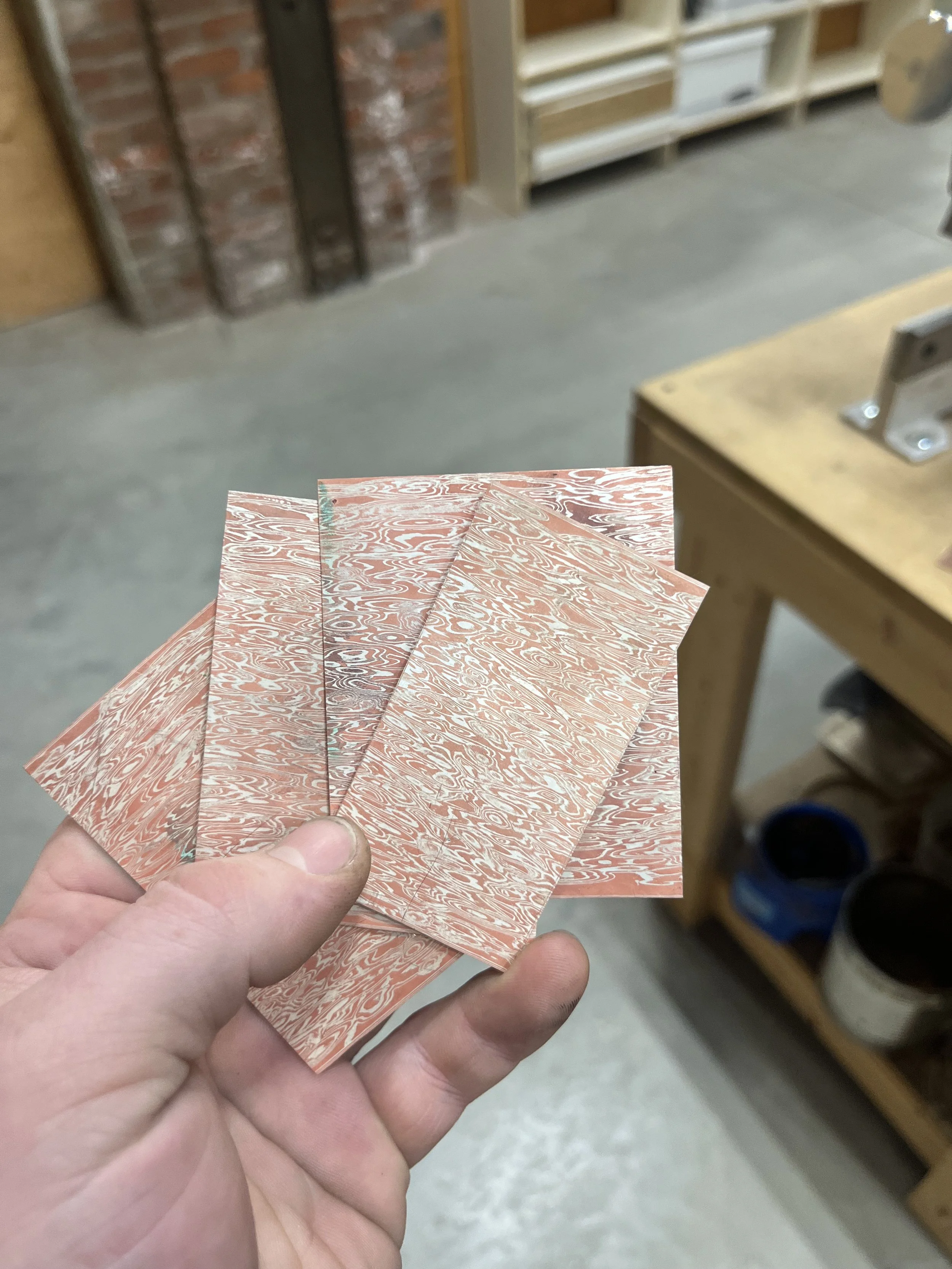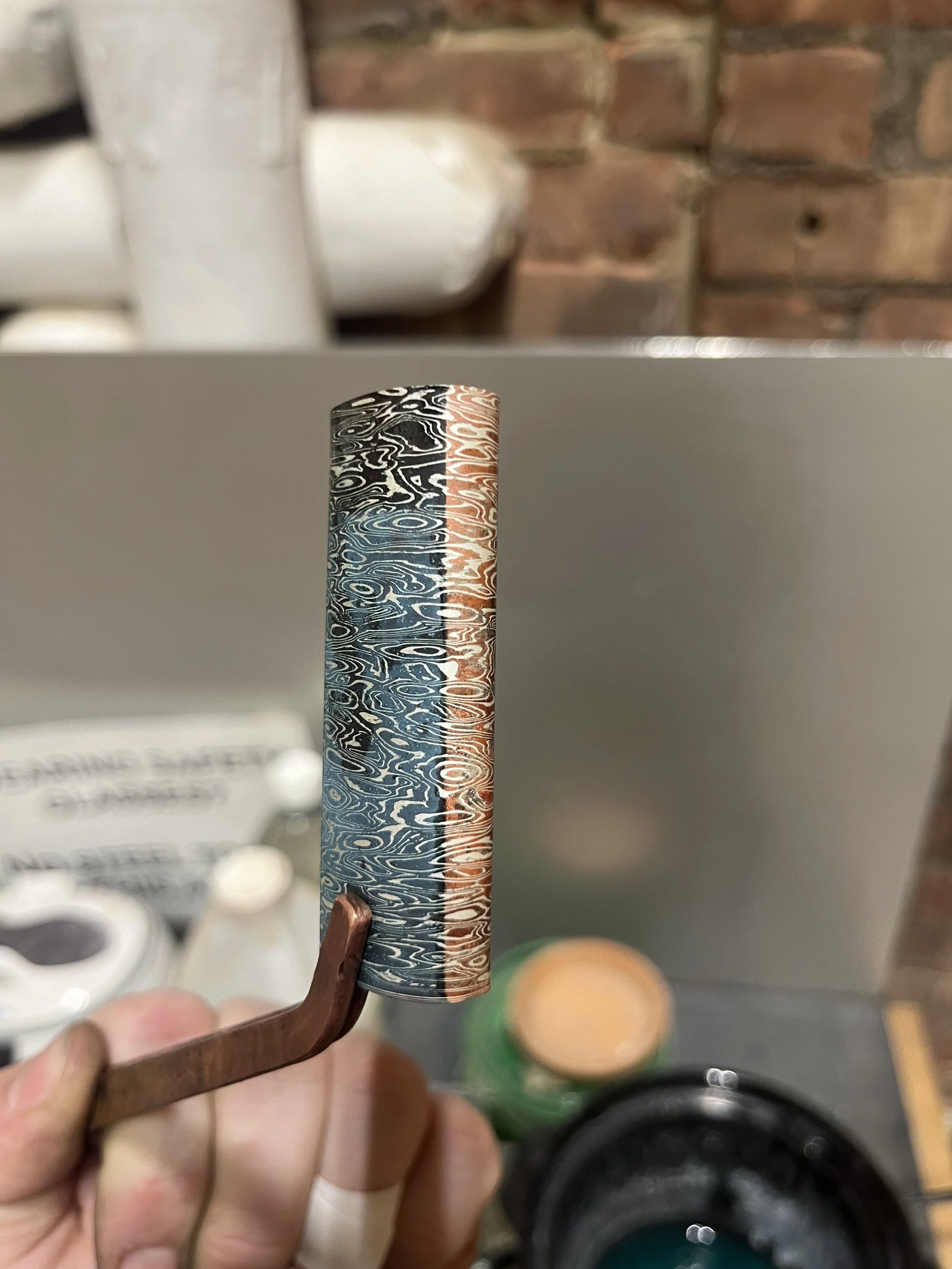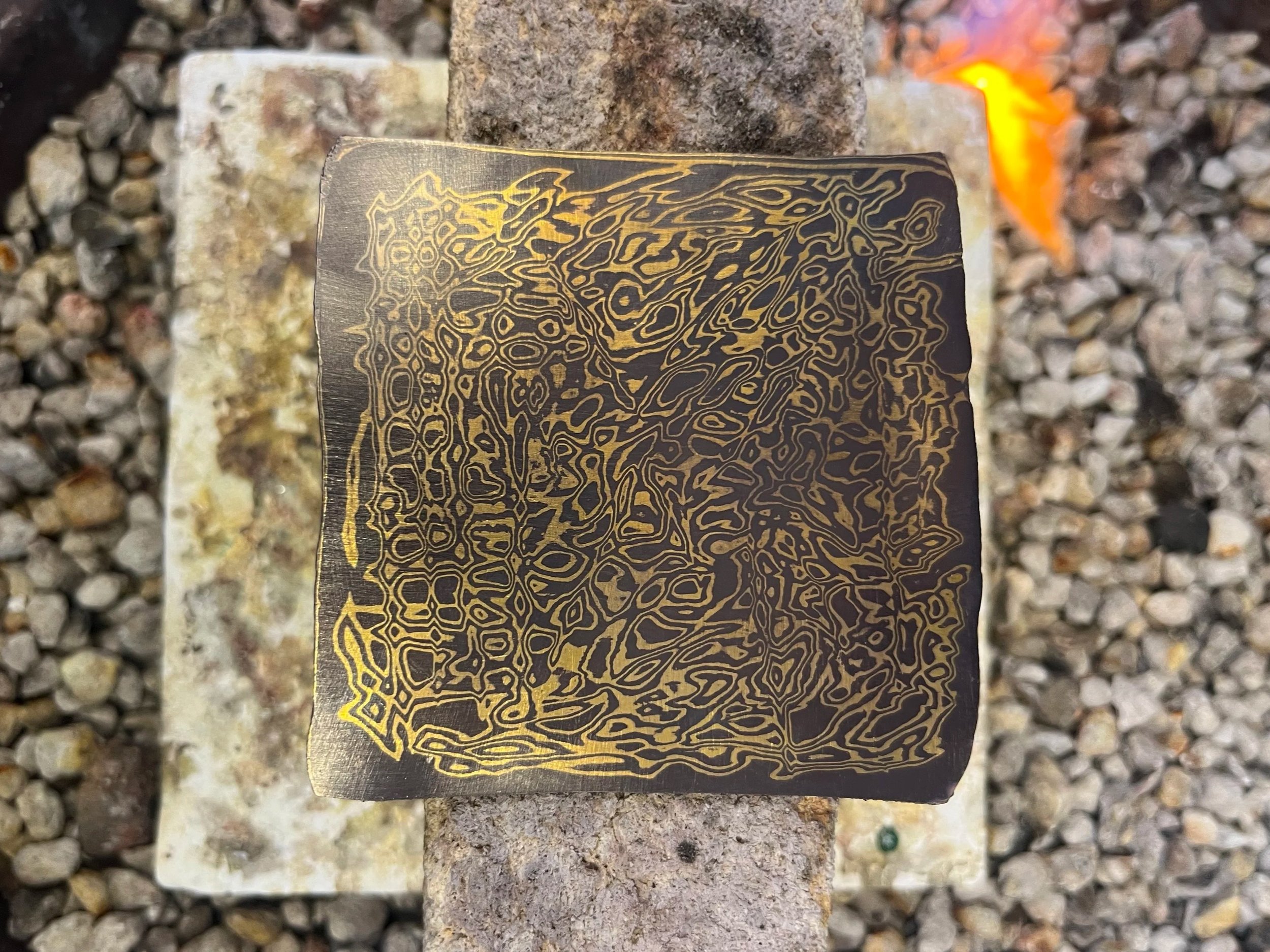
Mokume Gane is a Japanese metal smithing technique with origins in the early 1700s. The process involves fusing layers of different metals (traditionally silver, gold, and unique copper alloys) together into a single, workable billet; all without melting the entire mass into a big lump of nothing, and then working that billet down in thickness while strategically removing material to reveal the patterns made by the contrasting metals.
Since being brought to the US in the 70s by a pair of metalsmiths named Hiroko Sato Pijanowski and her husband, Gene Pijanowsk, who learned it in Japan from a craftsman named Norio Tamagawa, mokume has been studied, adored, and significantly modernized by a number of talented craftspeople, including (but certainly not limited to) Phillip Baldwin, Steve Midgett, and James Binnion.
My first introduction to the material was through my mentor, Jeff Georgantes, who told me about it after I asked him about a box labeled ‘mokume gane stuff’ that I had seen hidden up on a high shelf in the back of the old Donald Claflin Jewelry Studio at Dartmouth. Once I saw photos of it, I was obsessed, and a year or so later I was able to take a workshop with an instructor named Eric Burris, who showed us how to do the entire process, from stacking and firing the billet in an electric kiln to making finished pieces with the patterned material and staining it with different chemical patinas.
In this collection of photos, you’ll find some finished pieces of mokume jewelry/items, but a lot more behind the scene process photos, since this is still an area I’m actively exploring!